If You Try, You Can Do It!

Are you scared of the water?  Have you had a bad experience or an uncomfortable swim lesson elsewhere?  At Swim With Gale, we work with infants, children, teens, and adults giving them a positive experience while learning life-saving skills.  You’ll become stronger, safer, and happier in the water.

Become A Stronger, Safer, Happier Swimmer Today

Drowning Prevention


We all want to keep our children and loved ones as safe as can be.  Teaching your kids and loved ones to swim, hold their own in the water and get out of the water safely, is the first step.  Knowing how to prevent one from drowning, the leading cause of child injuries, is the key.


As we enjoy time at the pool, beach, rivers, and lakes, the first thing on your mind is not an injury.  Yet drownings are the leading cause of injury death for young children ages 1 – 14.  According to the CDC, three children die every day, as a result from drowning.  In fact, drowning kills more children ages 1-4 than anything else except birth defects.


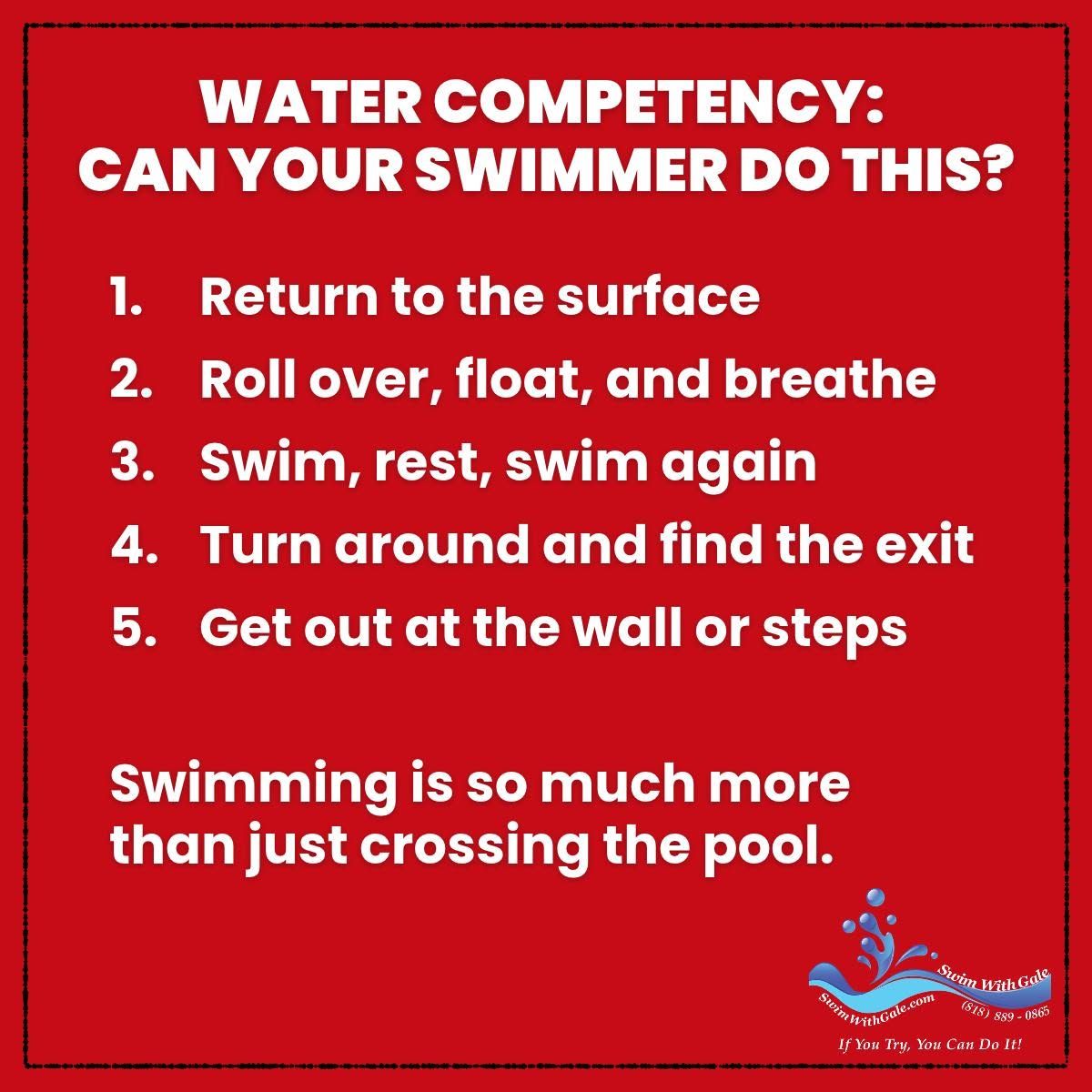
Thankfully, we can play a key role in protecting the children/adults you love from drowning.  Teaching your children/loved ones the basic skills of swimming will give them the confidence and skills they need to prevent injuries and save their lives.  These basic skills include floating (both face down and face up), manipulating one-self out toward the middle of the pool and back to the side or steps and getting out of the water safely on their own.


Learning CPR (cardiopulmonary resuscitation).


Install A Pool Fence, with self–closing and self–latching gates, completely around backyard swimming pools.  This can help keep children away from the area when they aren’t supposed to be swimming.  Pool fences should separate the house and play area completely from the pool.  A pool fence needs to be a complete barrier around your pool to separate it from the rest of your home.  There should be no way to enter your pool except through a designated gate in the pool fence.  Swimming pool fences come in many shapes and sizes and can be made from a variety of materials.  Some fences are permanent, while others are easily removable for times when they’re not needed.


Why You Need A Pool Fence


The main reason to have a fence around your pool is safety!  If you have children, pets, or anyone at home who is uncomfortable swimming or unable to swim, a pool safety fence is a must.


Even if your children are great swimmers, many homeowners’ insurance policies have a ‘pool addendum’ that requires a pool fence for your pool if your children are under a certain age. The risk of drowning is a serious concern, when it comes to the safety of your family, you can never be too careful.


Having a pool fence is a convenient way to keep pets and potentially wild animals out of your pool. It’s also a good way to wrangle pool toys and keep them contained out of the rest of the yard. Pool fences are incredibly beneficial with many options to choose from.


Pay Attention And Watch


When kids are in or near water (including bathtubs), closely supervise them at all times!  Since drowning happens quickly and quietly, adults watching kids in or near water should avoid distracting activities like playing cards, reading books, talking on the phone, and using alcohol or drugs.

By Gale Saul • October 26, 2026
Can your swimmer do all five water safety skills? Build water confidence with personalized, one-on-one swim lessons at Swim With Gale. Email us to book today.
By Gale Saul • October 23, 2026
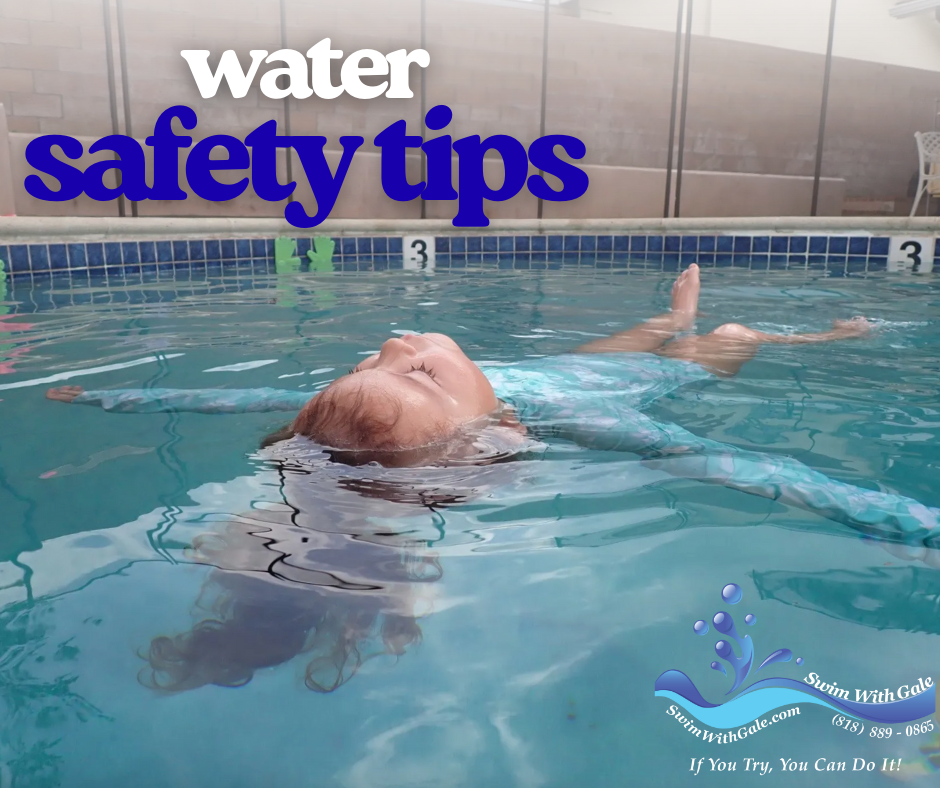
Learn why Swim With Gale teaches swimmers to roll onto their backs and float, giving them time to rest, breathe, think and call for help when they need it most.
By Gale Saul • October 23, 2026
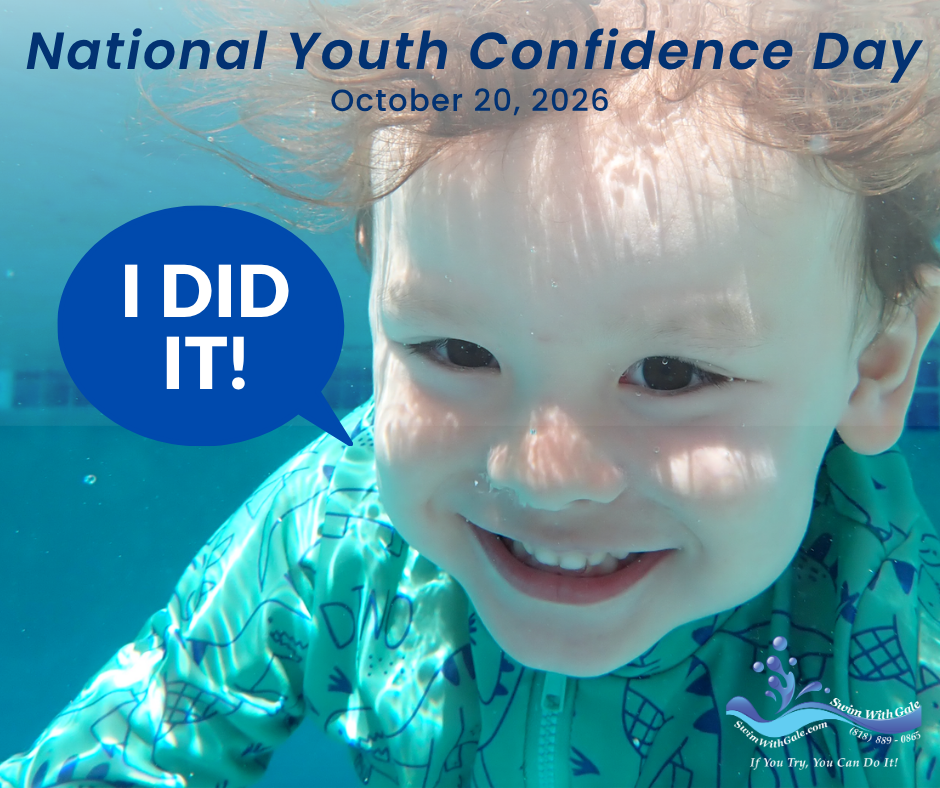
Celebrate National Youth Confidence Day with swimming milestones that help children build strong confidence, from floating on their backs to climbing out alone.
By Gale Saul • October 23, 2026
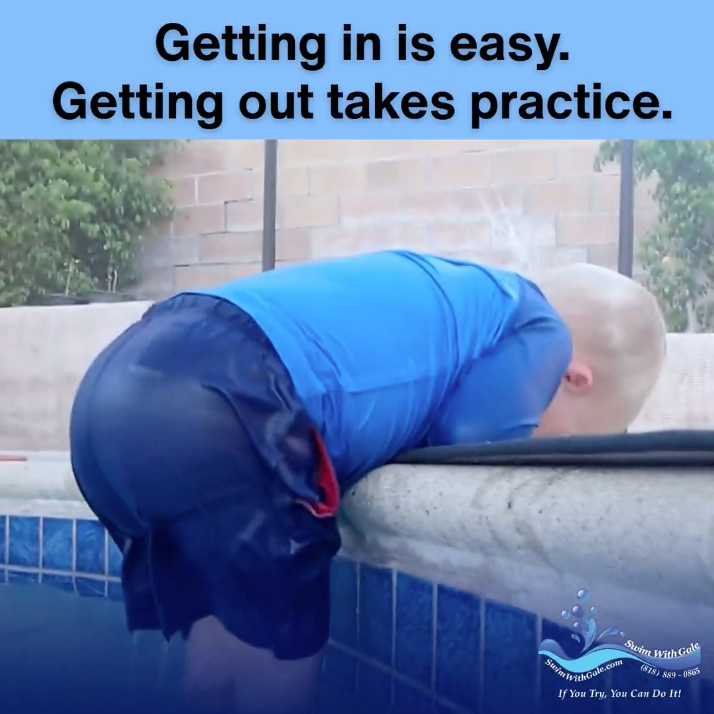
Can your child get out of the pool unassisted? Practice reaching the wall, moving to the steps and climbing out with an adult always staying within arm's reach.
By Gale Saul • October 23, 2026
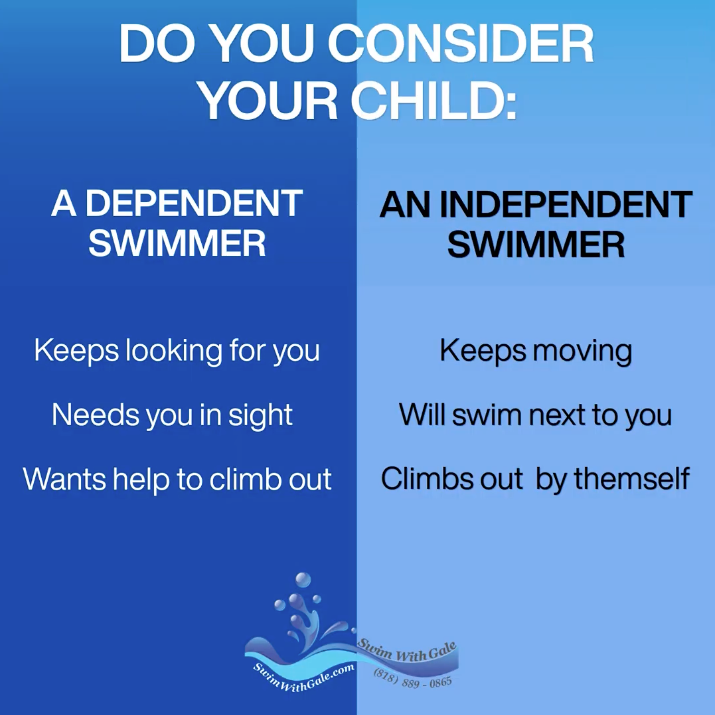
Learn the difference between dependent and independent swimmers, what to watch for in the pool, and how to help your child build confidence while staying safe.
By Gale Saul • September 19, 2025
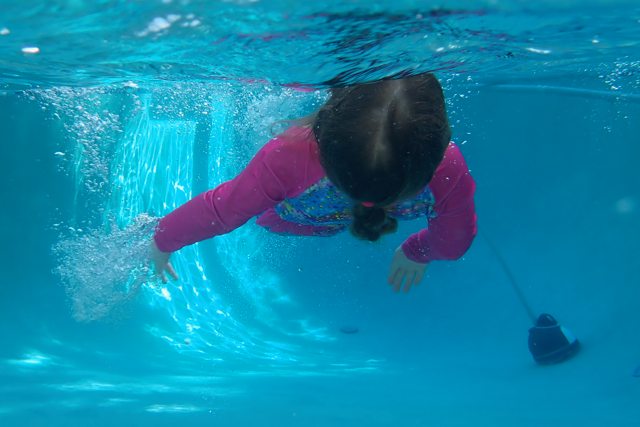
Learn how to stay calm and safe if you fall into water. Master floating, blowing bubbles, and proper kicks and strokes to stay afloat and swim confidently.
Swimwear Safety Alert for Parents
By Gale Saul • August 20, 2025
Bright swimsuit colors save lives. Neon shades like orange, yellow & pink stand out underwater—helping parents spot kids fast and prevent drowning risks.
January 4, 2023
Holding your breath to swim underwater seems practical. However, breathing deeply to the point of hyperventilation before swimming underwater or holding your breath for extended periods can be dangerous and potentially deadly. The body can go into a state of hypoxia — a condition in which the body is deprived of adequate oxygen supply, which can lead to unconsciousness. At Swim With Gale, we educate our students about the risks of hypoxic blackouts and help our students learn techniques to prevent it from happening. Being confident and comfortable underwater is an essential element of water competency. Knowing which breath holding techniques are unsafe is important in exercising good judgment for safe skill practice. For more information visit the red cross website.
March 5, 2021
What if? Have you ever wondered what would happen if…? As parents, we give our children all that they need to become a person who can take care of themselves and become a productive individual. We send our kids to school where they learn to read, write, grasp math concepts, social skills, physical fitness etc… Along with these basic human skills we wonder what sports would best fit our children, how can we keep our kids healthy and safe? As important as learning to read, write and communicate is, learning to swim is just as important if not more important! At Swim With Gale , we believe that swim instruction is not just another activity, learning to swim is a life-long skill that you will always have and a skill that could inevitable save your life! Our swim lessons/instruction emphasize the safety aspects of being in and around the water. We strive to teach our students the necessary skills they need to keep safe when in and around the water. Our students learn how to be confident in that moment of “what if”! Our students, no matter what their age, (infants, children, adults) all learn that “if they try, they can do this”. We have infants, as young as 3 months old, learning to keep themselves safe if they ever fall into the water. The children learn to swim, rest and swim some more without ever “needing” to get to the edge. Swim With Gale educates the students to think and respond to the thought process of: “I am wet, this is what I need to do, and do it”. Gale gets her students to automatically react to the task at hand! The task being “what if”? What if, I get pushed into the pool? What if, I fall into the pool fully clothed? What if, I fall off the float/noodle? What if, I get pulled while swimming in the water? What if, I am pushed deeper into the water? What if, the camp pool is very crowded, and someone jumps on me? What if….? Am I ready to enjoy the pool at camp? What if, I swim too far out into the pool and get tired? What if, I go to the pool and see someone having a difficult time while in the water, am I a strong enough swimmer to help someone in need? Learning to swim is not enough, learning to hold your own in a water environment is everything! If you never learn to do any other sport, it will not cost you your life. If you never learn to swim, it could cost you your life! If you want your family to be stronger, safer, and happier in the water, get them swim lessons, so everyone can start enjoying the water’s benefits. We are in Oak Park, California and are here to help you! Feel free to contact us if you have any questions or concerns. Strive to become a safer, stronger, and happier family of swimmers!
February 28, 2021
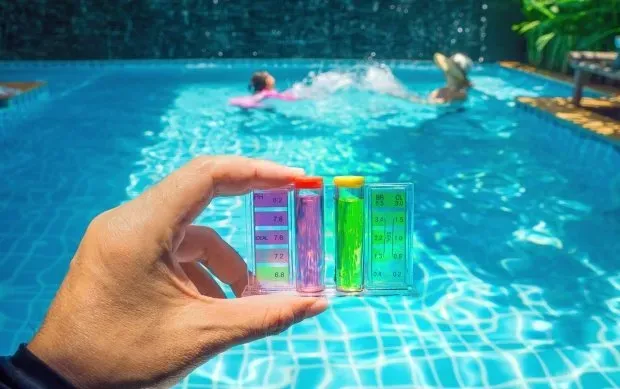
Water Chemistry Good water chemistry always starts with balanced water. Balanced water is keeping the pH, alkalinity, and water hardness in proper levels. Healthy water is achieved with good water chemistry, followed by proper chlorination and sanitization. Test the pool weekly for pH and chorine levels, (you will need a good test kit to monitor chlorine and water balance levels). Salt chlorine generators can be set to a certain output level, but temperature and changes in weather can use more chlorine than is created, so you must test the pool chlorine level in a saltwater pool, and adjust the output as needed. In addition to testing a saltwater pool for pH, alkalinity, calcium hardness and cyanuric acid, you also now need to test the salinity level, or the amount of salt in the pool, in parts per million, or ppm. Many inground units monitor salt levels. Some display the salt level or have a ‘Low Salt’ indicator light, testing with salt test strips is still a good idea to calibrate or double-check the salt sensor. Saltwater Pools A saltwater pool is not a chlorine-free pool. Saltwater pools create their own chlorine by passing slightly salty water through two electrically charged metal plates, called the Salt Cell. Through electrolysis, salt (NaCl) and water (H20), are converted into chlorine (Cl2), hydrogen (H2) and sodium hydroxide (NaOH), as the water passes through the energized salt cell. Saltwater pools can often be easier to manage, as salt systems administer “free” chlorine into the pool eliminating the need for super chlorination or shocking the pool. This “free” chlorine molecule disinfects and has no nasty smell or irritation. With a salt system you do not get combined chlorine molecules or “chloramines” (chloramines do not sanitize, they do smell and irritate your skin, eyes, and hair). Using a salt system, you will notice less of a chlorine smell in the water, or on the skin after swimming, and no more ‘red-eye’ swimmers. Saltwater Pools vs Chlorine Pools As a recap ~ all pools use chlorine. Saltwater pools simply generate chlorine through a natural process as compared to traditional chlorine pools that rely on adding chemicals to the water. Basically, saltwater pools offer a consistent stream of chlorine that the pool requires, while eliminating the chemical byproducts. This natural salt process is less irritating for skin, hair, clothes, and eyes. The amount of salt in a swimming pool is also not going to cause the kind of irritation and discomfort many associate with the ocean. The water doesn’t taste very salty (it’s a fraction of the salinity of ocean water). Whereas chlorine is incredibly effective as a sanitizing agent, when it’s not maintained just right it can also easily affect your body, leaving your skin itchy, your eyes red and your clothing bleached. Your hair may feel dry and brittle, and blond hair may turn green. Which sanitation system is best for you? Like any other subject matter, everyone has their own opinions – as do we, Swim With Gale uses a salt water system. However, in the end, the choice is ultimately yours. Happy Swimming! Ideal Pool Chemistry Levels pH 7.2 – 7.6 Alkalinity 80 – 120ppm Stabilizer (cyanuric acid) 40 – 60ppm Calcium hardness 200 – 400ppm Free available chlorine 1.0 – 3.0ppm Healthy swimming pool water can be obtained by having good water chemistry followed by proper chlorination and sanitization. Swimming Pool Water Balancing Pool water balancing is simply the relationship between pH, alkalinity, and water hardness. Your swimming pool water is constantly changing, as plant material debris, dirt, body oil and lotions enter the water they also change the water balance. As the water in the pool is not changed very often, continuous filtration and disinfection removes contaminants, which keep the water enjoyable. However, filtration and disinfecting alone does not balance your water. Water Chemistry Definitions pH For optimum chlorine sanitization the ideal range for pH is from 7.2 – 7.6. The ability of chlorine to oxidize matter and kill microorganisms is directly affected by pH. At a pH over 8.0 scaling (precipitation of mineral components) and cloudy water may result. As pH falls below 7.0 the acidic condition will cause irritation to the eyes and mucous membranes of swimmers. Low pH (acidic water) can also corrode metal parts of a pool system and damage the plaster finish. To lower the pH, muriatic (hydrochloric) acid must be added. To raise the pH, soda ash (sodium carbonate) must be added. The human eye has a pH value of 6.5 – 7.6 being just slightly basic. This is, coincidentally, in range with proper pH levels for your pool. In a saltwater pool, the total salt content is approximately that of human tears, which is a lot less than the salinity of ocean water. Yes, kids, that means you can open your eyes underwater! Alkalinity Alkalinity is used to buffer the pH. When the alkalinity is off you then have erratic pH and damage occurs. To lower the alkalinity, muriatic (hydrochloric) acid must be added. To raise the alkalinity, soda ash (sodium carbonate) must be added. If you notice a continuous high alkalinity levels, it is probable due to a high calcium hardness. The recommended levels of alkalinity are 80 -120ppm. Chlorine Chlorine is the most common used chemical for the sanitization of swimming pools. It not only eliminates bacteria and algae by disinfecting it also oxidizes other materials such as plant material debris, dirt, body oils, suntan lotion, etc… After adjusting the pH levels, the next essential chemical is chlorine. The average level for chlorine is 1.0 – 3.0ppm. Super Chlorination (“Shocking”) is the process of adding enough chlorine to raise the chlorine levels above 18ppm. This will burn off the contaminants and kill algae and bacteria. Leaving only the “free chlorine” to sanitize your pool. Cyanuric Acid (Stabilizer) Now that you’ve adjusted the levels of chlorine you will need to add a stabilizer to protect your chlorine from being diminished by the sun. Cyanuric acid protects chlorine levels from UV rays and keeps chemical levels at a steady range. The recommended level for cyanuric acid is 40 – 60ppm. Adding a stabilizer can raise cyanuric acid levels if they are too low. However, if levels are too high simply drain 2” to 3” and add fresh water. Calcium High calcium levels will raise the alkalinity of the pool water making the pH erratic. As calcium levels increase the chlorine levels decrease, diminishing the effectiveness of the chlorine. Recommended levels of calcium hardness fall between 200 – 400ppm. Low levels of pH will etch and corrode the pool and equipment. With high levels of pH, scale deposits form. When calcium levels are too low, balance the level by adding calcium hardness. If calcium is too high, you can drain the water 2” to 3” and add fresh water. Zinc Anode Many pool owners use a zinc anode as part of their pool system. A sacrificial anode is an affordable device you can purchase for added protection against possible corrosion and damage to pool hardware. It’s a good idea to check it once a year to ensure it hasn’t degraded fully. Salt Now that you have balanced water, you are ready to add salt. All salt chlorinators have a suggested range for salt; however, the average typically runs between 2700 to 3500ppm. With some salt chlorinators being as high as 4500ppm.